
Summation of Series: Convergence; bound; shift — VJC 2025 H2 Math Prelim Paper 1
What this question tests
Question
It is given that \[ \sum_{r=2}^{n} \frac{1}{r(r^2-1)} = \frac{1}{4} + \frac{1}{2(n+1)} - \frac{1}{2n}. \]
(a) Show that \(\displaystyle\sum_{r=2}^{n} \frac{1}{r(r^2-1)}\) is less than \(\dfrac{1}{4}\).
(b) Give a reason why the series \(\displaystyle\sum_{r=2}^{\infty} \frac{1}{r(r^2-1)}\) converges, and write down its value.
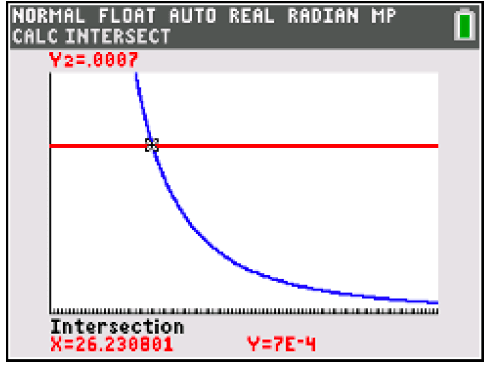
(c) Find the smallest value of \(n\) for which \(\displaystyle\sum_{r=2}^{n} \frac{1}{r(r^2-1)}\) differs from \(\displaystyle\sum_{r=2}^{\infty} \frac{1}{r(r^2-1)}\) by less than \(0.0007\).
(d) Find \(\displaystyle\sum_{r=m+1}^{N} \frac{1}{(r-m)(r-m+1)(r-m+2)}\), where \(m\) and \(N\) are integers with \(N > m > 0\).
(There is no need to express your answer as a single algebraic fraction.)
Show full worked solution▾
(a) For \(n \ge 2\), \[ \frac{1}{2(n+1)} - \frac{1}{2n} = \frac{n - (n+1)}{2n(n+1)} = \frac{-1}{2n(n+1)} < 0. \] Hence \[ \sum_{r=2}^{n} \frac{1}{r(r^2-1)} = \frac{1}{4} + \underbrace{\frac{1}{2(n+1)} - \frac{1}{2n}}_{<\,0} < \frac{1}{4}.\quad \]
(b) As \(n \to \infty\), \(\dfrac{1}{2(n+1)} \to 0\) and \(\dfrac{1}{2n} \to 0\), so \[ \sum_{r=2}^{n} \frac{1}{r(r^2-1)} \to \frac{1}{4},\quad \text{a finite constant.} \] (c)
\[ \left|\sum_{r=2}^{n} \frac{1}{r(r^2-1)} - \sum_{r=2}^{\infty} \frac{1}{r(r^2-1)}\right| < 0.0007 \] \[ \left|\frac{1}{4} + \frac{1}{2(n+1)} - \frac{1}{2n} - \frac{1}{4}\right| < 0.0007 \] \[ \left|\frac{1}{2(n+1)} - \frac{1}{2n}\right| < 0.0007 \]Using GC:
| \(n\) | \(\left|\dfrac{1}{2(n+1)} - \dfrac{1}{2n}\right|\) |
|---|---|
| 26 | \(0.000712 > 0.0007\) |
| 27 | \(0.000661 < 0.0007\) |
Smallest value of \(n = 27\).
(d)
\[\begin{aligned} &\sum_{r=m+1}^{N} \frac{1}{(r-m)(r-m+1)(r-m+2)} \\ &= \frac{1}{1(2)(3)} + \frac{1}{2(3)(4)} + \cdots + \frac{1}{(N-m)(N-m+1)(N-m+2)} \\ &= \sum_{r=2}^{N-m+1} \frac{1}{(r-1)(r)(r+1)} \\ &= \sum_{r=2}^{N-m+1} \frac{1}{r(r^2-1)} \\ &= \frac{1}{4} + \frac{1}{2(N-m+2)} - \frac{1}{2(N-m+1)} \end{aligned}\]