How to Help Your Child with Secondary 1 Maths: A Parent’s Guide (2026)
By the Math Academy Team — NUS-trained, ex-MOE tutors · Updated July 2026
The most effective way to help your child with Secondary 1 maths is not to re-teach the syllabus — it is to build the habits and confidence that let them learn it themselves. Many parents worry they have forgotten the maths or never did it the “new” way, but you do not need to. Your role is to protect a regular routine, insist on full working, and step in early when gaps appear. This guide gives parents practical, classroom-aligned ways to support a Secondary 1 student, whatever your own comfort with maths.
- You don’t need to be good at maths to help — protecting a routine and a calm environment matters more.
- Ask to see working, not just answers; method is what Secondary maths actually grades.
- Use free, exam-style practice questions so your child does maths actively rather than re-reading notes.
- Watch the first term: a brief dip while adjusting is normal, a struggle into Term 2 is the signal to get help.
You don’t need to be a maths expert to help
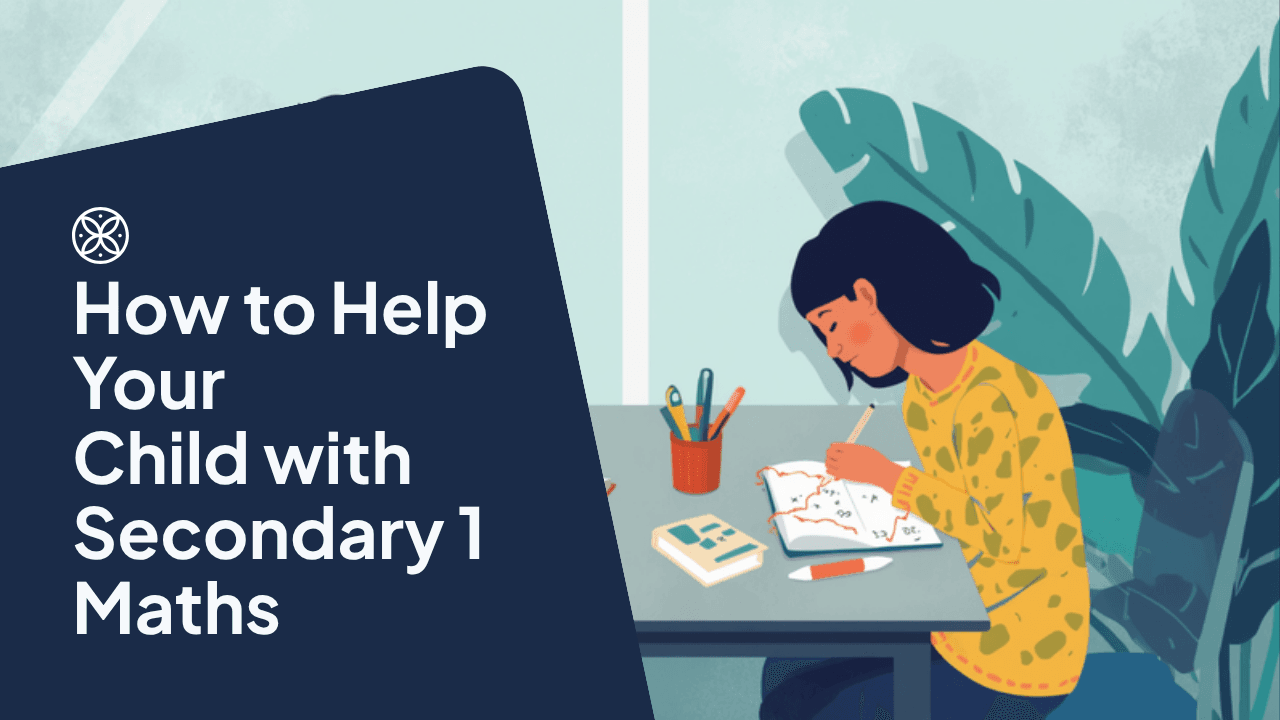
The most valuable support a parent gives is structure and encouragement, not subject expertise. You do not have to remember how to factorise or solve equations — your child’s teachers and resources cover the content. What moves the needle is creating the conditions for consistent practice: a quiet space, a protected study slot, and a calm, encouraging tone when things are hard. Confidence in maths grows from small, visible wins, and a steady routine is what produces them. If you would like a structured programme to carry the teaching, our Sec 1 Maths tuition handles the content while you support the habits at home.
Protect a short, regular practice routine
Little and often beats long, occasional sessions — and a routine is something any parent can help maintain. Aim for three or four 20-minute sessions a week at fixed times, so practice becomes automatic rather than a nightly negotiation. You don’t need to teach during these sessions; you only need to help guard the time and keep it short enough that your child stays focused. For the study method itself, our guide on how to study Secondary 1 maths lays out a routine you can put in place together.
Ask to see working, not just answers
One simple habit makes a real difference: ask your child to show you their working, not just the final answer. Secondary maths awards method marks, so the steps matter — and you can support this even without checking whether the maths is correct. Asking “can you talk me through how you got that?” does two things: it reinforces the habit of writing each step, and it often helps your child catch their own mistake as they explain. You are not marking the work; you are encouraging the method.
Give your child active practice
Children learn maths by doing it, not by re-reading notes — so the best help is pointing them to good questions. Math Academy publishes a free bank of Secondary 1 Maths practice questions, organised by topic with full worked solutions and drawn from real Singapore school papers. Because each comes with a worked solution, your child can attempt a question, check the method, and re-try anything they missed — without you needing to know the answer. If algebra is the sticking point, our guide to Secondary 1 algebra basics walks through the core skills with examples you can review together.
Spot struggles early — and respond calmly
The first term of Secondary 1 is an adjustment period, so read it kindly. A new school, faster lessons, more independent study and the jump to algebra and negative numbers all arrive at once, and a brief dip in results is common and normal. What matters is the trend: if difficulties continue into Term 2, that is the signal to step in with targeted support rather than waiting for the year-end exams to expose the gaps. Our guide on whether Secondary 1 maths is hard explains what is normal and what is not during the transition.
Keep maths positive at home
Your attitude to maths shapes your child’s more than you might expect. Avoid passing on “I was never a maths person” — it quietly gives children permission to give up. Instead, treat mistakes as a normal, useful part of learning, celebrate effort and small improvements, and keep the tone low-pressure. A child who believes they can get better, and who sees steady progress from a regular routine, will persist through the hard parts. That mindset, more than any single study tip, is what carries students through Secondary 1 and beyond.
When to consider extra help
Targeted support is worth considering when a few signs appear together: difficulties that persist past the first-term adjustment, visible gaps in foundation topics like algebra or negative numbers, a steady drop in test results, or a loss of confidence and motivation. Addressing these early, while the syllabus is still building on itself, is far easier than catching up before major exams. Good support does not just drill questions — it rebuilds foundations and confidence at the same time. Our Sec 1 Maths tuition is designed around the Secondary 1 transition, pairing structured practice with the exam technique that turns understanding into marks.
Frequently asked questions
How can I help my child with Secondary 1 maths if I’m not good at maths?
You don’t need to know the maths. Protect a regular study routine, keep a calm and encouraging tone, ask your child to talk you through their working, and use practice questions that come with worked solutions so they can self-check. Structure and consistency matter more than subject expertise.
How much should I help with maths homework?
Support the process, not the answers. Help maintain a regular study slot, ask to see working, and encourage your child to attempt questions independently and check the solutions themselves. Doing the work for them removes the practice that actually builds skill.
My child suddenly struggles with maths in Secondary 1 — what should I do?
Early struggles are usually about the transition, not ability. Keep practice short and regular, review mistakes calmly, and treat the first term as an adjustment period. If difficulties continue into Term 2, consider targeted support to close gaps before they compound.
What free resources can help my child practise Secondary 1 maths?
Math Academy offers free Secondary 1 Maths practice questions with full worked solutions, organised by topic and drawn from real Singapore school papers, at mathacademy.sg/sec-1-maths/. These let your child practise actively and self-check without you needing to know the answers.
How do I know if my child needs Secondary 1 maths tuition?
Consider it when several signs appear together: struggles that persist beyond the first-term adjustment, gaps in foundation topics like algebra, a steady decline in test results, or lost confidence. Early intervention, while the syllabus is still building, is much more effective than waiting.
How can I keep my child motivated in maths?
Keep the tone positive and low-pressure, celebrate effort and small wins, and avoid framing maths as something people are simply born good or bad at. A regular routine that produces visible progress builds the confidence that keeps children persisting through difficult topics.
Helping your child with Secondary 1 maths is mostly about consistency, calm and catching problems early — all of which any parent can do, regardless of their own maths background. If your child would benefit from structured, transition-focused teaching alongside your support at home, our Sec 1 Maths tuition is led by NUS-trained, ex-MOE tutors who specialise in the Secondary 1 jump.