
Sec 1 Maths: Angles & Parallel Lines — practice questions & worked solutions
Angle-chasing questions from Singapore Secondary 1 examination papers, each with a full worked solution that states every reason — the way marks are actually awarded.
About this topic & key angle rules
Angle problems are one of the most heavily tested areas in Secondary 1 Mathematics. Almost every question below is solved by combining a small set of angle facts: angles on a straight line, angles at a point, vertically opposite angles, and the three parallel-line relationships — corresponding, alternate and co-interior angles — together with the angle properties of triangles, special quadrilaterals (rhombus, kite, trapezium, parallelogram) and polygons.
The marks in these questions are usually awarded for stating the correct reason, not only for the final number. Each worked solution below names the rule used at every step. For a structured programme that teaches this reasoning from the ground up, see our Secondary 1 Maths tuition.
Key angle rules
- Angles on a straight line add up to 180°.
- Angles at a point add up to 360°.
- Vertically opposite angles are equal.
- Corresponding angles (parallel lines) are equal.
- Alternate angles (parallel lines) are equal.
- Co-interior angles (parallel lines) add up to 180°.
- Angle sum of a triangle is 180°; base angles of an isosceles triangle are equal.
- Special quadrilaterals: opposite angles of a rhombus are equal, adjacent angles are supplementary, and each diagonal bisects the vertex angles.
Questions & worked solutions
Rhombus angles & parallel lines
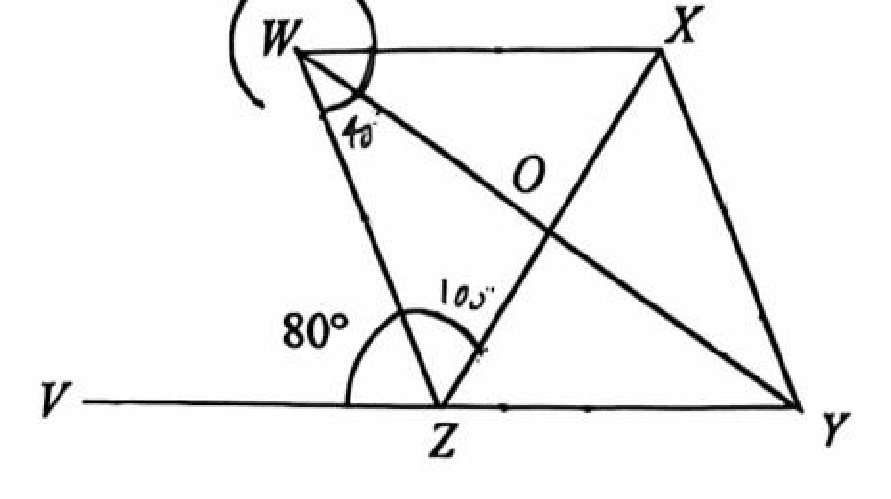
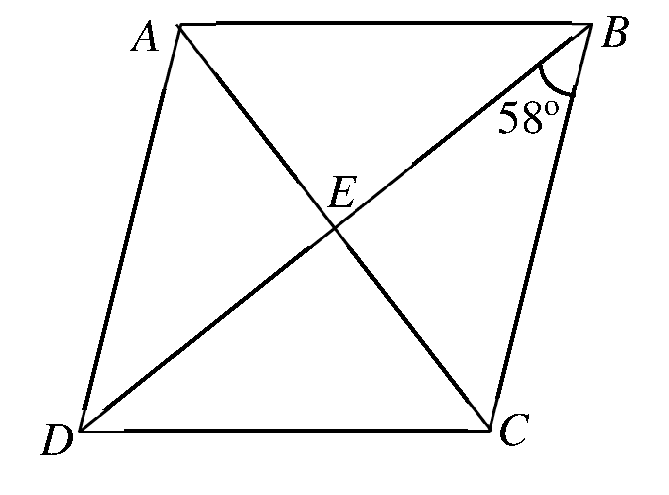
is a rhombus and is a straight line. The diagonals and meet at . Given that angle , find reflex angle , stating your reasons clearly.
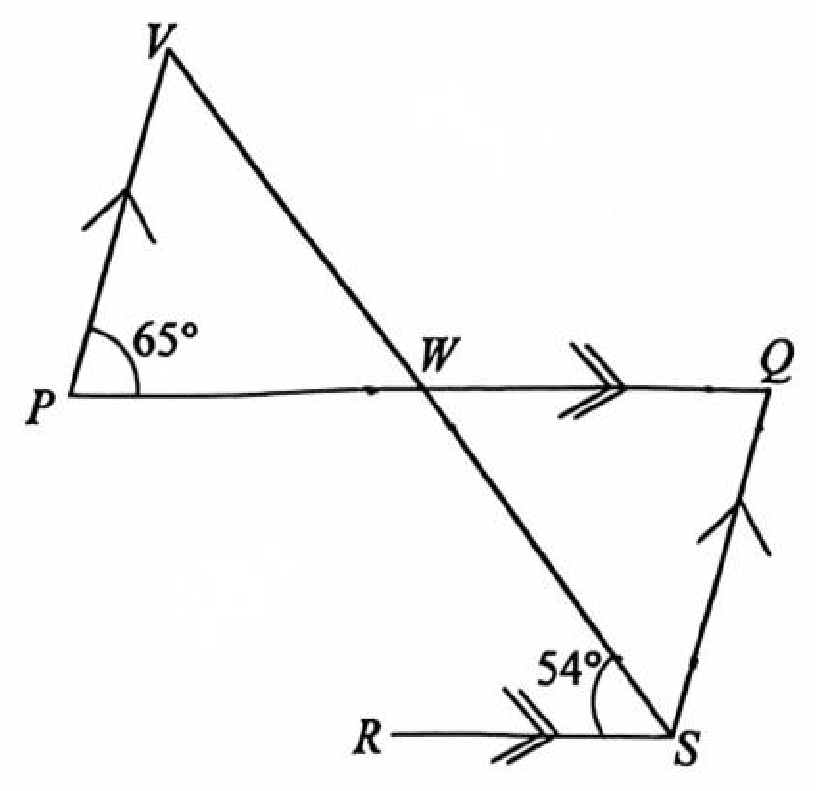
is parallel to and is parallel to . Given angle and angle , calculate
angle
angle , stating your reasons clearly.
Show worked solution▾
(a) Reflex angle
Interior angle , using angles on the straight line :
Adjacent angles of a rhombus are supplementary:
(b)(i) Angle
(b)(ii) Angle
In triangle :
Parallel lines: alternate & co-interior angles
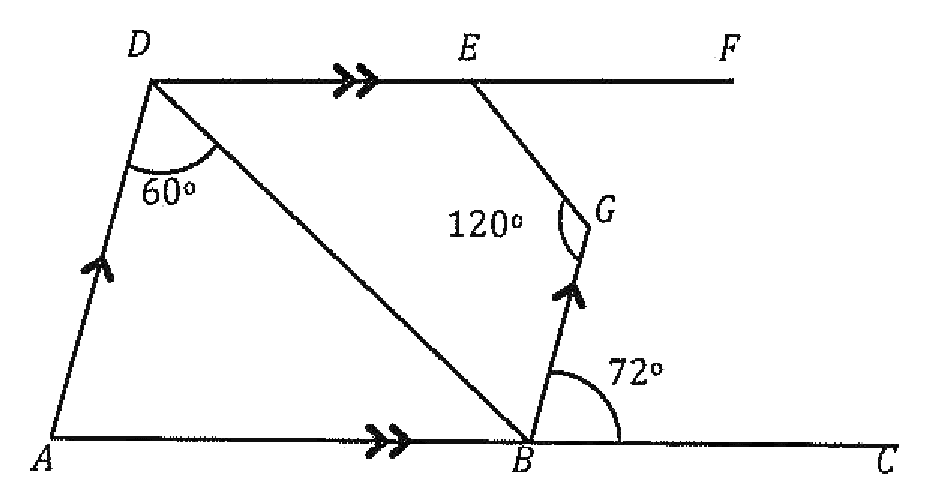
and are parallel straight lines, , , and .
Find (a) , (b) , (c) .
State, with reasons, the relationship between and .
Show worked solution▾
(i)(a) (alternate angles, , transversal ).
(b) , so (angles on straight line ). Then (alternate angles, ).
(c) (corresponding angles, , transversal ).
(ii) : , so these co-interior angles are supplementary.
Square & isosceles triangle
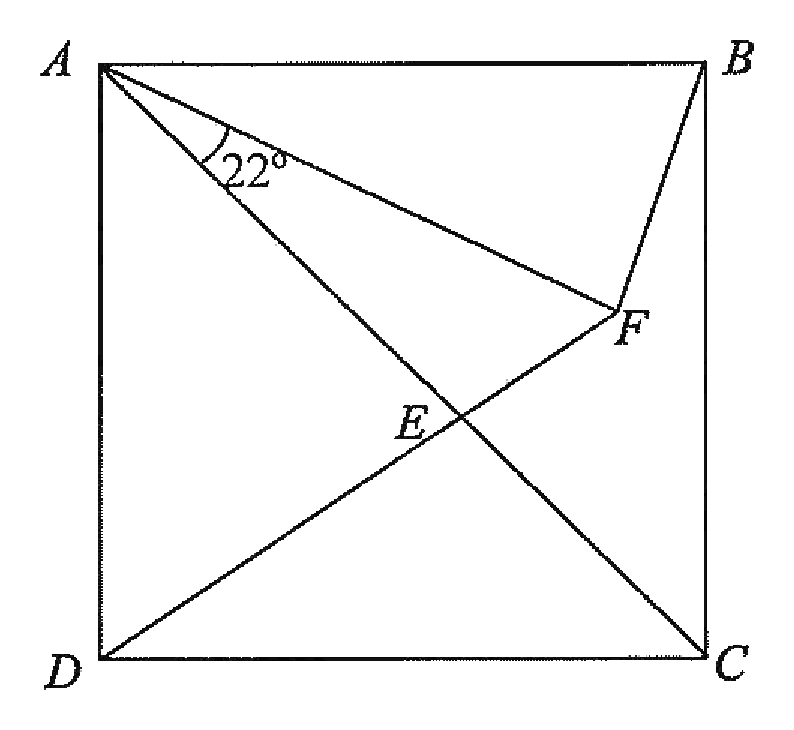
is a square and is isosceles with ; and are straight lines. Given :
find
show is isosceles and find
find .
Show worked solution▾
is the diagonal of the square, so ; since lies on , and .
(i)
In isosceles (), base angles are equal:
(ii) and
, so is isosceles. With :
(iii)
In , . Since is a straight line:
Is AC parallel to FD?
, , and reflex .
Is parallel to ? Support with reasons.
Find .
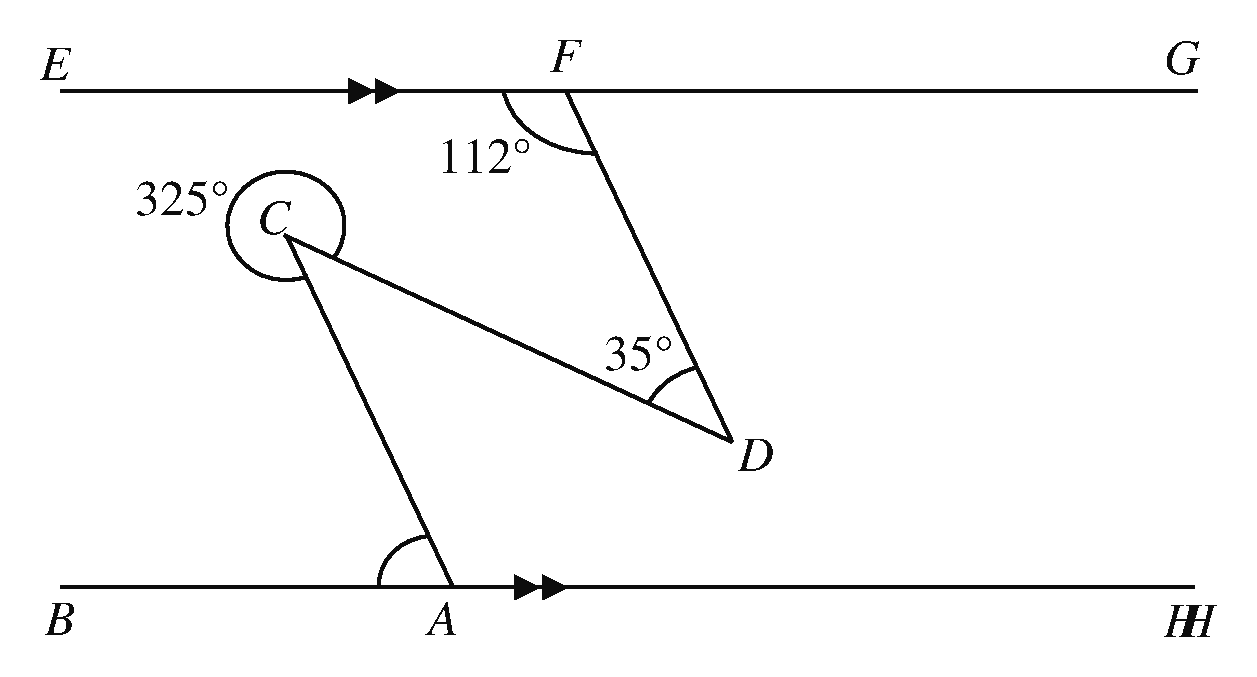
Show worked solution▾
(i)
For transversal , ; these alternate angles are equal, so .
(ii)
Multiple parallel lines, reflex angle
and . is where , and meet; lies on . Given , and , find
reflex .
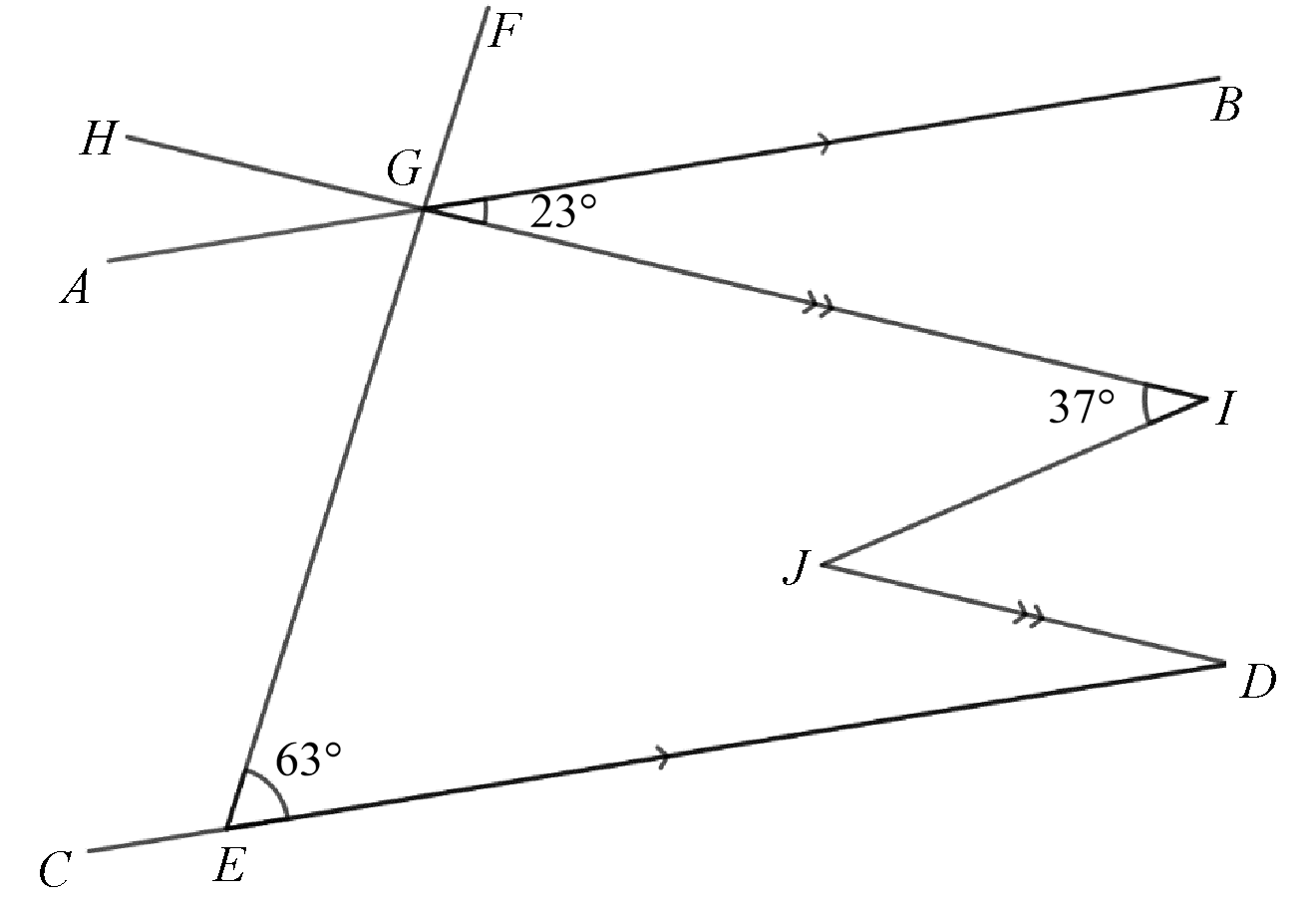
Show worked solution▾
(i) (vertically opposite angles).
(ii) with transversal , so and are co-interior:
(iii) (alternate angles, ).
(iv) Using and , , so:
Three parallel lines, find x and y
and is a straight line. The marked angles are at , at and at . Find and .
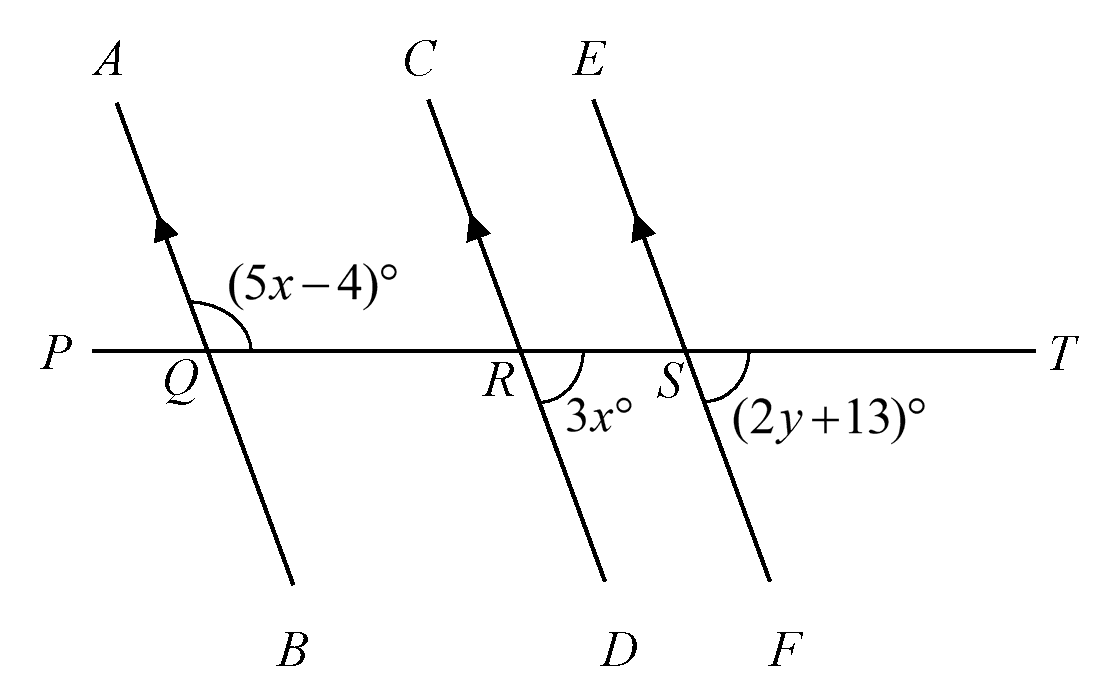
Show worked solution▾
With and transversal , the marked angles at and are supplementary:
With , the angles and are corresponding, hence equal:
Rhombus & isosceles triangle
is a rhombus, is isosceles, and is a straight line. Given , , , , and , find , and .
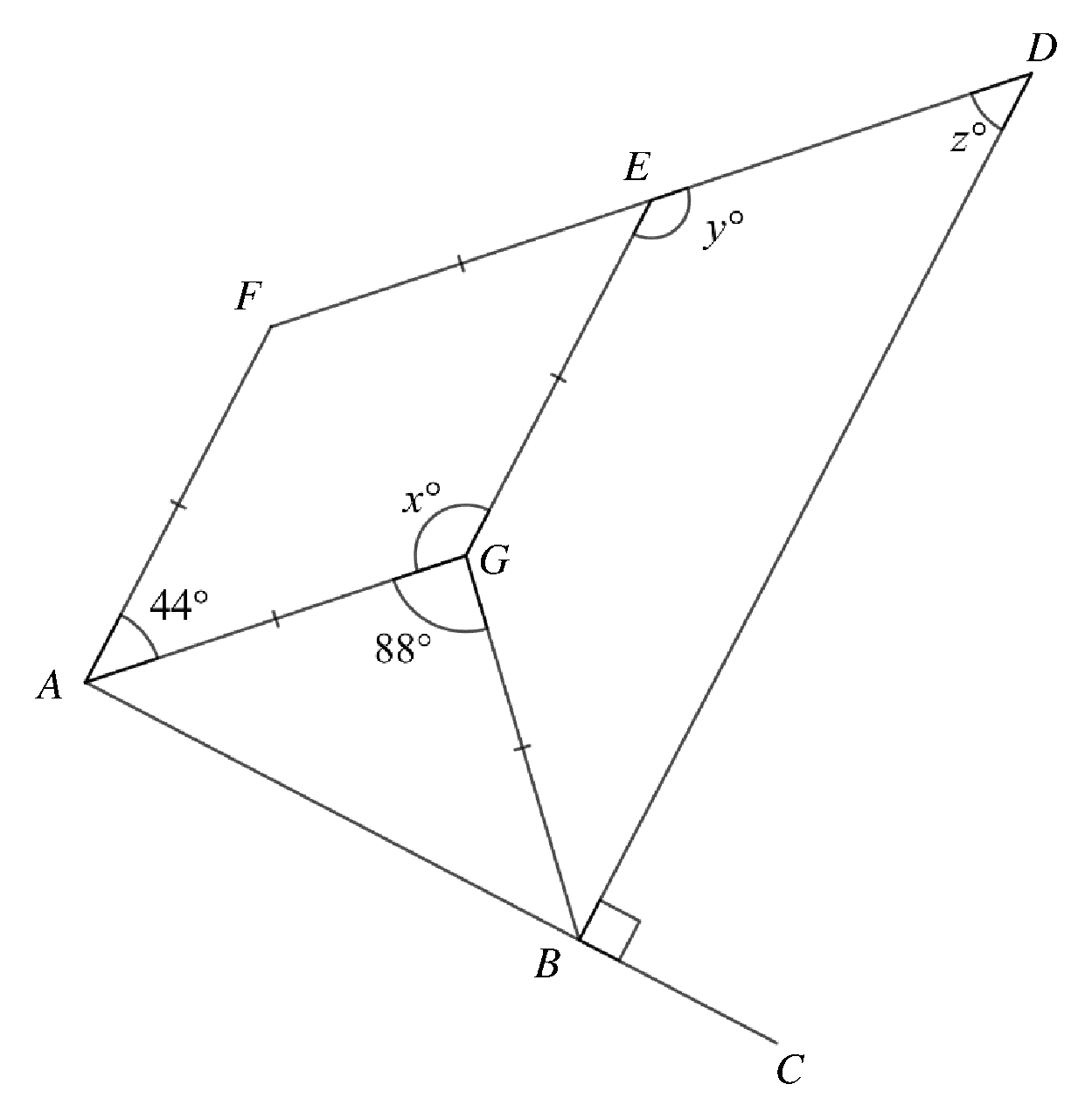
Show worked solution▾
(i) In rhombus , , so and are co-interior:
(ii) Opposite angles of the rhombus are equal, so . Since is a straight line:
(iii) In isosceles , . Working through the straight line with gives:
Construction line, reflex angle
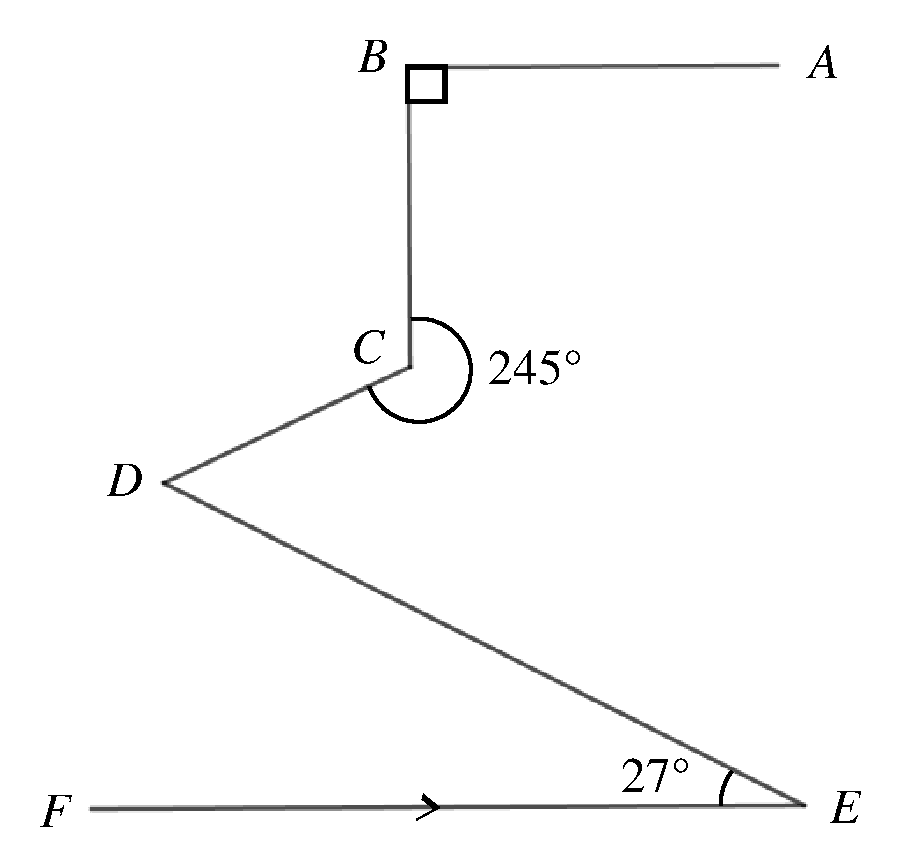
, , reflex angle and . Find reflex angle .
Show worked solution▾
Draw a line through parallel to and . Interior and . The upper part of the angle at is:
The lower part equals (alternate angles). So the obtuse , and:
Rhombus diagonal & pentagon proof
is a rhombus and is the intersection of the diagonals. Given , find .
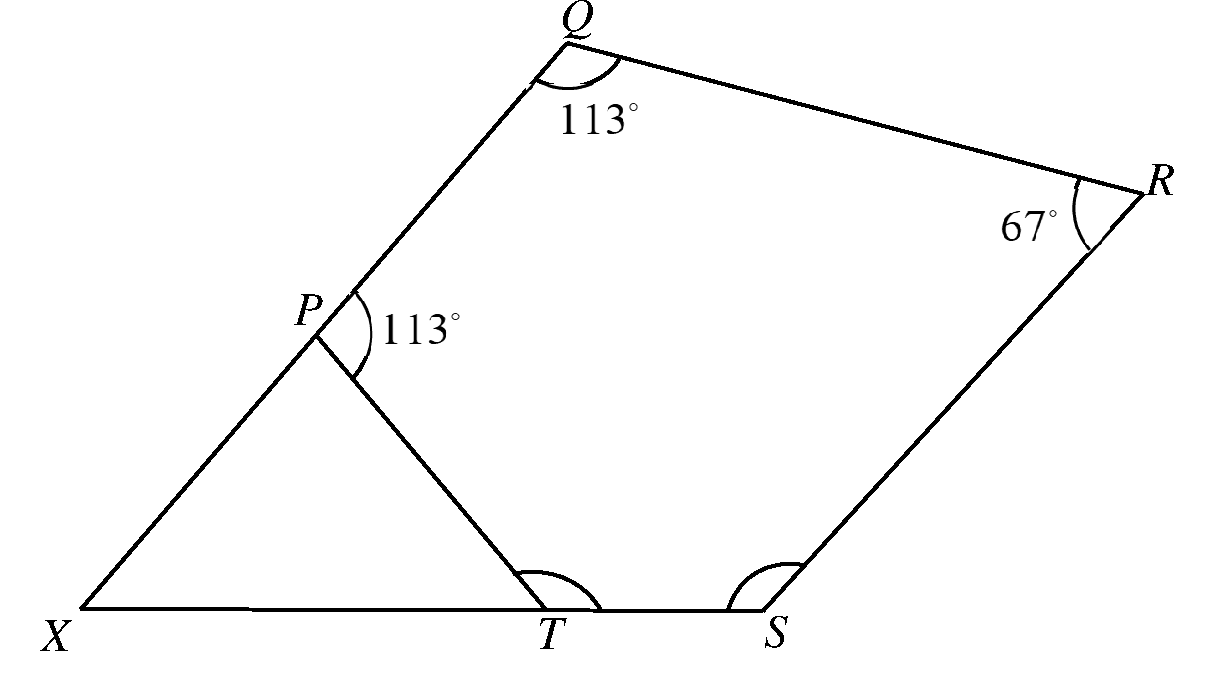
is a pentagon with , and ; and produced meet at .
Calculate .
Explain whether .
Prove that is isosceles.
Show worked solution▾
(a)
Diagonals of a rhombus bisect the interior angles, so . With , co-interior angles give , and bisects it:
(b)(i)
Angle sum of a pentagon is , with :
(b)(ii)
, so the co-interior angles are not supplementary and is not parallel to .
(b)(iii)
and (angles on straight lines). Then . Since , is isosceles.
Reflex angle & angle-bisector test
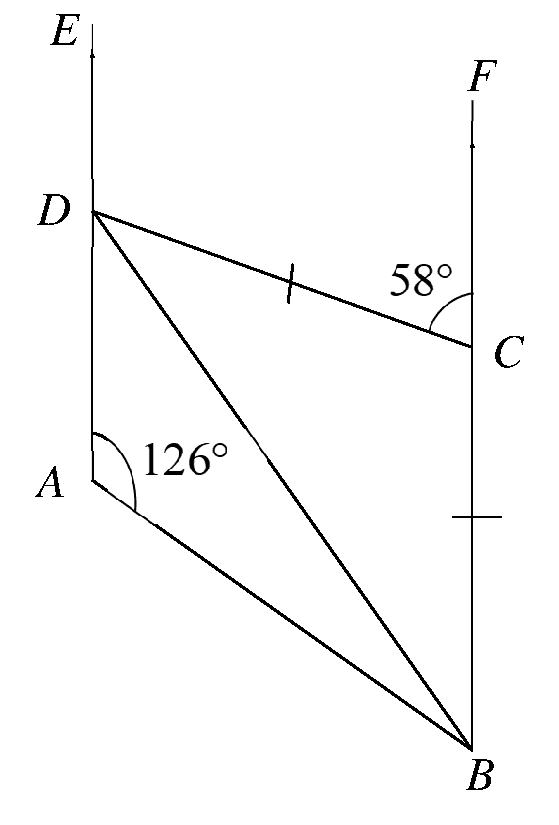
and are straight lines, , , and .
Find (i) reflex , (ii) .
Explain whether bisects .
Show worked solution▾
(a)(i) reflex (angles at a point).
(a)(ii) is a straight line, so . Triangle is isosceles ():
(b) With , . Since , is not an angle bisector of .
Form an equation in x
, , and reflex . Find , showing your reasons.
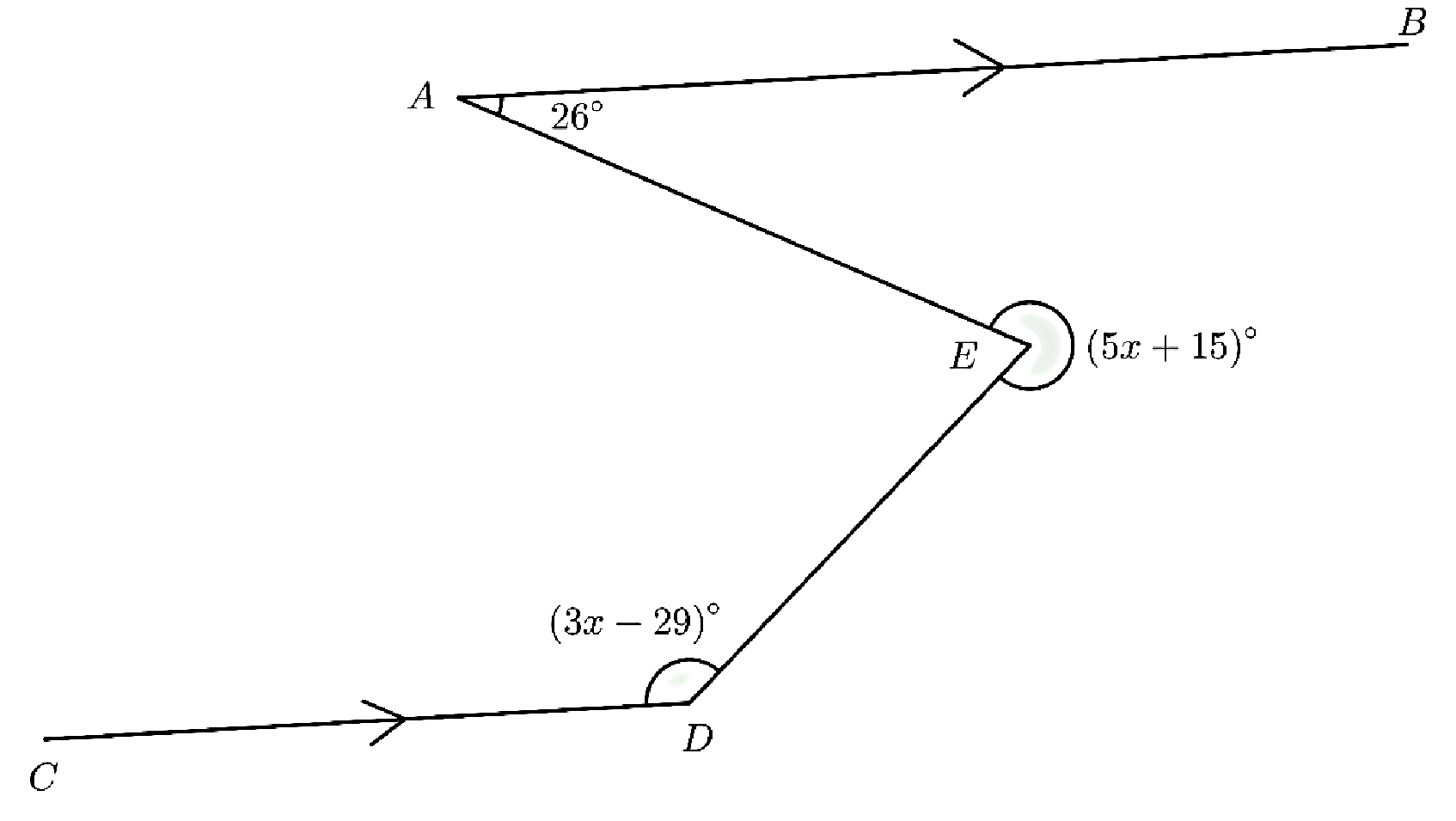
Show worked solution▾
Angles at the point : . Drawing a line through parallel to and :
Equating the two expressions:
Angle bisector & parallel lines
is a straight line and bisects . , , , , and . Find , and .
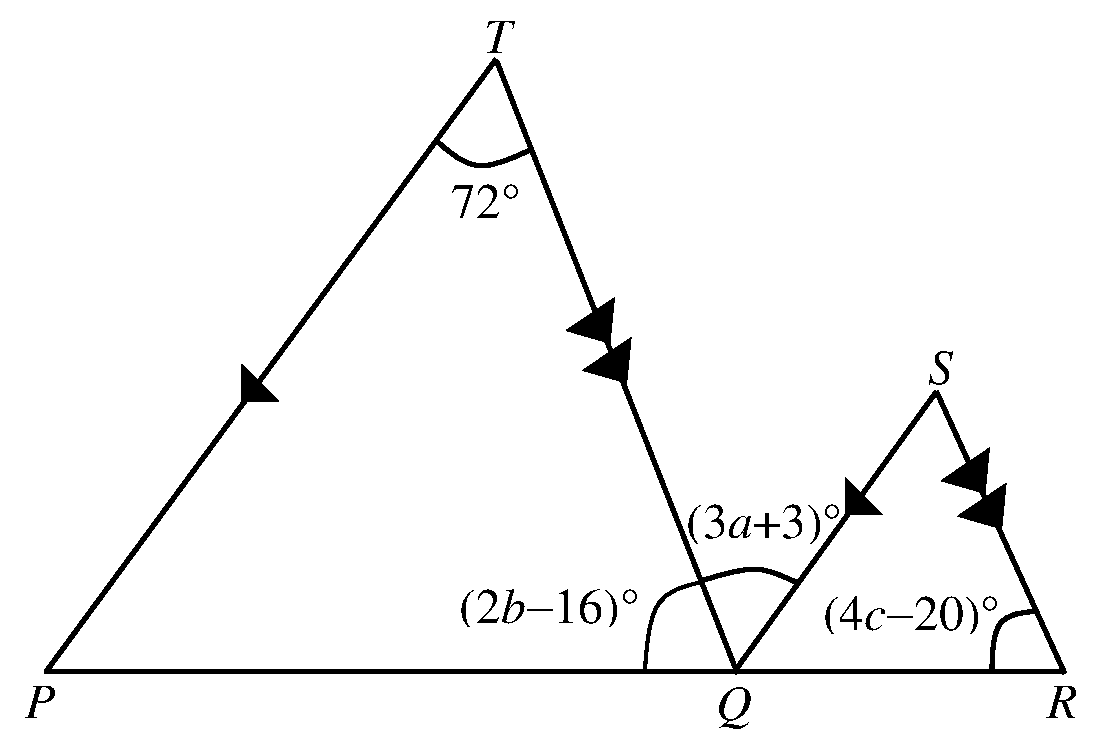
Show worked solution▾
, so (alternate angles):
bisects , so :
, so (corresponding angles):
Angle bisector & isosceles triangle
, bisects , and .
Find .
Show that is isosceles.
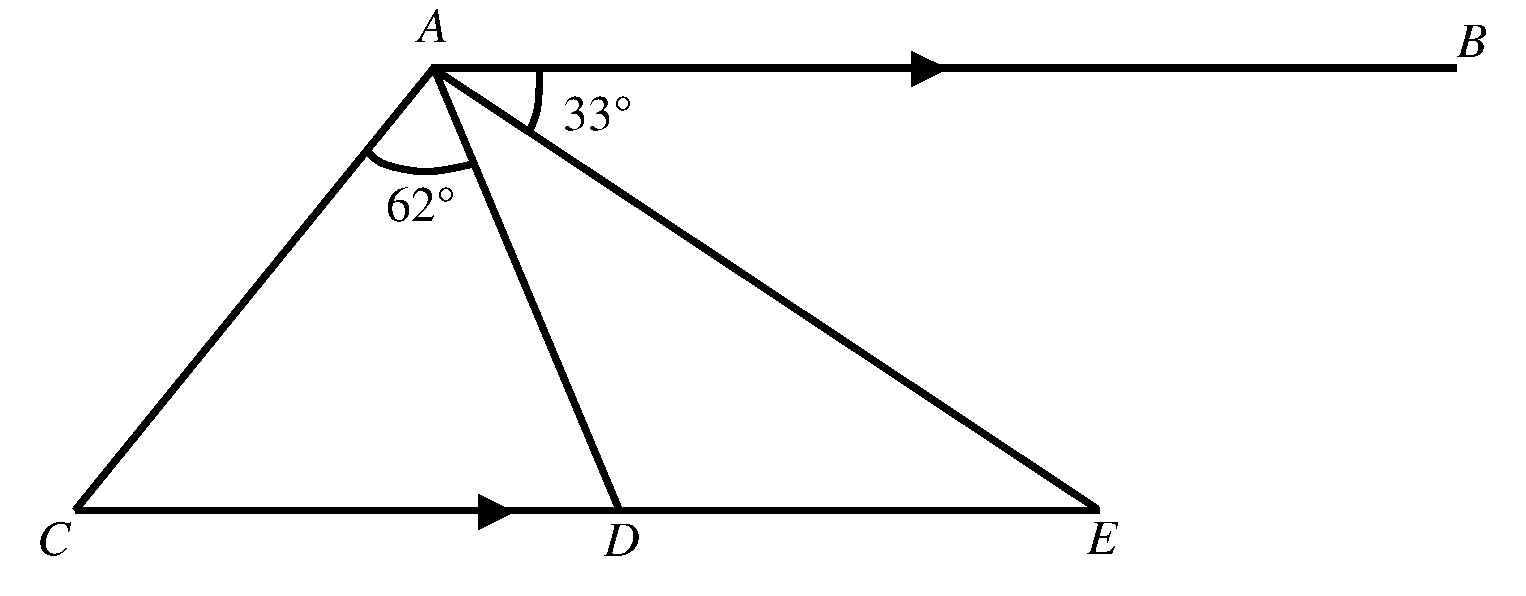
Show worked solution▾
(a)
bisects , so , giving . With and transversal , co-interior angles give:
(b) isosceles
bisects , so ; and (alternate angles, ). Two equal base angles mean , so is isosceles.
Secondary 1 Maths programme — every method behind these questions, taught step by step.