
Sec 1 Maths: Basic Algebra — Expansion & Factorisation practice questions & worked solutions
Algebra questions from Singapore Secondary 1 examination papers, covering expansion, factorisation, simplifying algebraic expressions and substitution — each with a full worked solution that shows every step the way marks are actually awarded.
About this topic & key algebra methods
Basic algebra is the foundation of almost everything that follows in Secondary 1 Mathematics. The questions below drill the core manipulation skills: expanding brackets, collecting like terms, factorising out common factors, simplifying algebraic fractions over a common denominator, and substituting given values into an expression. Master these and the work on linear equations, number patterns and word problems becomes far more straightforward.
In Sec 1 algebra the marks are awarded for clean, correct working — the right common denominator, every term expanded, the highest common factor taken out fully — not just the final line. Each worked solution below sets out one logical step per line so you can see exactly where each mark is earned. For a structured programme that builds this fluency from the ground up, see our Secondary 1 Maths tuition.
Key algebra methods
- Expand brackets by multiplying every term inside by the factor outside, watching signs carefully.
- Collect like terms after expanding — combine terms with the same variables and powers.
- Factorise common factors by taking out the highest common factor (number, variable and bracket) completely.
- Simplify algebraic fractions by rewriting over a common denominator, then expanding and collecting the numerator.
- Substitute values into an expression, using brackets around negatives and fractions, before evaluating.
Questions & worked solutions
Combine algebraic fractions
Express as a single fraction in its simplest form.
Show worked solution▾
Substitution into a formula
Without the use of a calculator and given that , find the value of when , and .
Show worked solution▾
Single fraction & unit conversion
Express as a single fraction in its simplest form.
Gold costs cents per gram. Celina bought a gold necklace which costs dollars. Write down an expression for the mass of the necklace in terms of and .
Show worked solution▾
(a) Using a common denominator of :
(b) dollars cents. Mass in grams:
Factorise with a common bracket
Factorise the following completely:
.
Show worked solution▾
(a) Common factor :
(b) Common factor :
Gradient & parallelogram on a grid
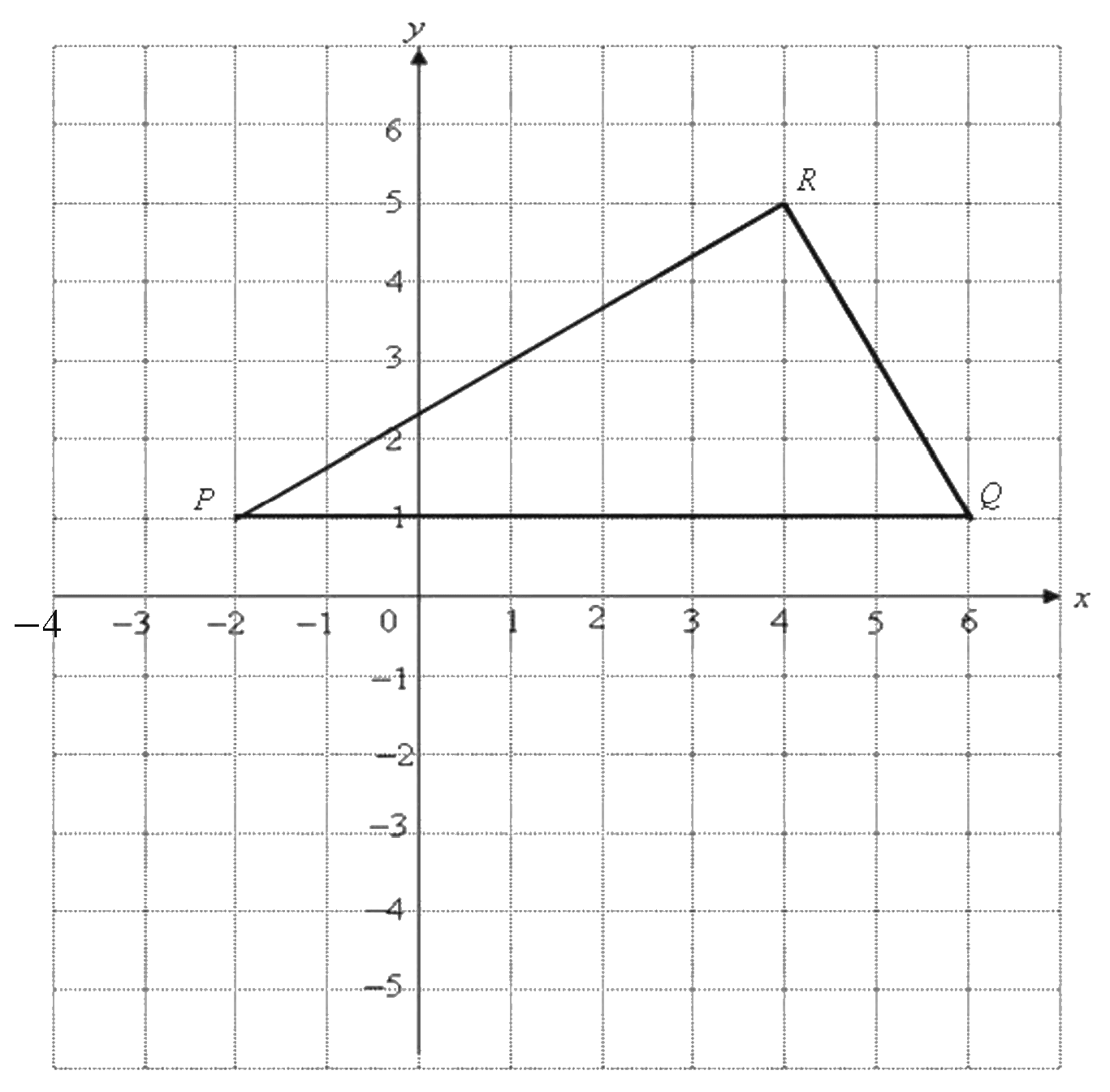
The grid below shows triangle .
State the gradient of the line .
Write down the coordinates of such that is a parallelogram.
On the grid, draw and label the graph of .
Show worked solution▾
From the grid, , and .
(a) lies along the line (horizontal), so
(b) For a parallelogram, :
(c) is the vertical line through all points with -coordinate .
Fractions, expansion & factorisation
Express as a single fraction in its simplest form.
Expand and simplify .
Factorise , expressing your answer in its simplest form.
Show worked solution▾
(a)
(b)
(c)
Factorise & combine fractions
Factorise the expression .
Simplify the expression .
Show worked solution▾
(a) Common factor :
(b) Common denominator :
Expand and simplify with fractions
Expand and simplify completely.
Show worked solution▾
Factorise with a common bracket
Factorise completely.
Show worked solution▾
Note , so take as a common factor:
Single fraction & factorise by grouping
Express as a single fraction in its simplest form.
Expand and simplify completely, leaving your answer in its factorised form.
Show worked solution▾
(a)
(b)
Form an equation from a word problem
There are four numbers. The first number is half of the second number. The third number is 6 less than the first number. The fourth number is times the third number.
Given that the first number is , write down expressions, in terms of , to represent the second, third and fourth numbers. The average of the four numbers is 27.
Form an equation, in terms of , and solve it.
Hence find the sum of the first and third numbers.
Show worked solution▾
(i) First , so
(ii)
(iii)
Expand a nested bracket & factorise
Expand and simplify .
Factorise completely.
Show worked solution▾
(a) Expand the inner brackets:
Inside the square bracket:
Multiply by :
(b)
Bounds, estimation & simplifying
Given that and find
the greatest possible value of
the smallest possible value of .
By showing your working clearly, estimate the value of , correct to one significant figure.
Simplify
.
Show worked solution▾
(a)(i) Greatest uses largest and smallest .
(a)(ii) Since , the range includes , giving the smallest square.
(b) Round each value to one significant figure.
(c)(i)
(c)(ii)
Bounds & single-fraction work
Given that and are integers, and , find
the least possible value of
the greatest possible value of .
Write each of the following as a single fraction, in its simplest form.
Show worked solution▾
(a)(i) is least when (an allowed integer), giving ; least .
(a)(ii) Largest product from and :
(b)(i)
(b)(ii)
Ratio from an equation & factorising
Given that , find the value of .
Factorise completely.
By factorising , show that it is always even for all positive integers of .
Show worked solution▾
(a)
(b)(i)
(b)(ii)
and are consecutive integers, so one of them is even and the other is odd. The product of an even and an odd number is always even, hence is always even.
Coordinates, area & parallelogram
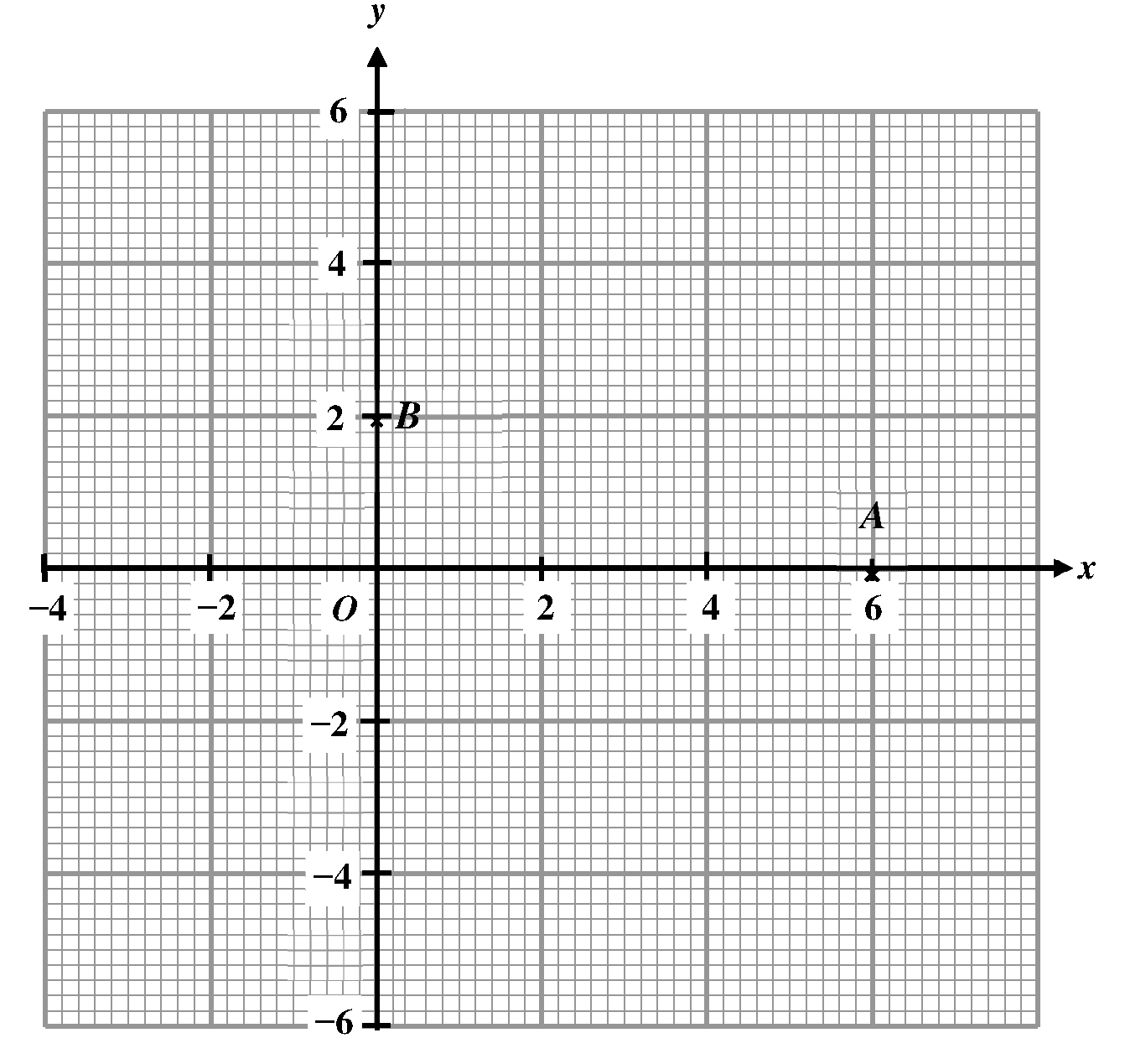
On the axes shown, is a point , is a point and is a point on the negative -axis. The area of triangle is half that of triangle .
Plot point on the diagram above and state the coordinates of .
State the equation of the vertical line .
State the coordinates of such that is a parallelogram.
Show worked solution▾
(a) Area of triangle . Area of triangle is twice this .
As is on the negative -axis: .
(b) and both lie on the -axis, so the line is
(c) For parallelogram , , so :
Factorise completely
Factorise each of the expressions completely.
Show worked solution▾
(a)
(b)
Simplify expressions & fractions
Simplify
Show worked solution▾
(a)
(b)
(c)
Factorise & expand a nested bracket
Factorise completely.
Expand and simplify .
Show worked solution▾
(a)
(b)
Substitution & algebraic fractions
If , find the value of when .
A piece of wire is m long. Alvin cut it into three pieces. One piece is m and the other is m long. Express the length of the remaining piece, in terms of , and as a single fraction.
Show worked solution▾
(a) Substitute :
(b) Remaining . Use common denominator :
The remaining piece is m.
Factorise & expand a nested bracket
Factorise completely.
Expand and simplify .
Show worked solution▾
(a) Common factor :
(b)
Substitution & rhombus angle
It is given that . Without using the calculator and showing your working clearly, find the value of when .
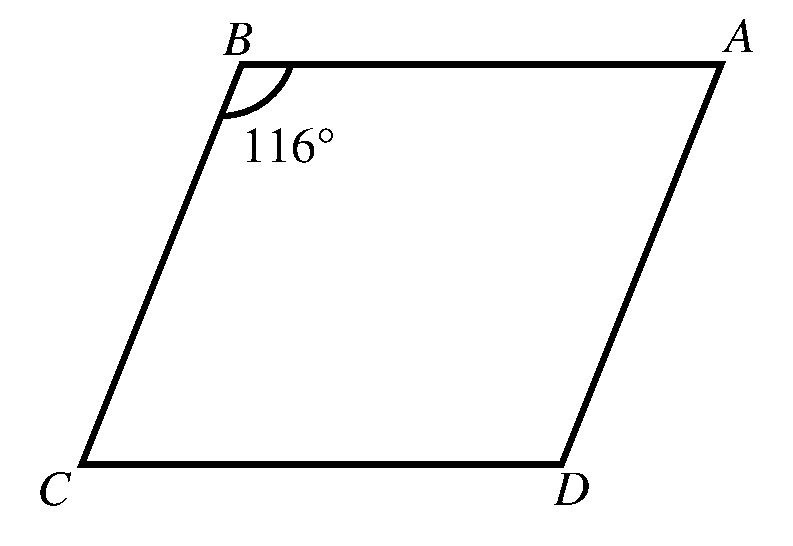
In the diagram below, is a rhombus. It is given that . Find .
Show worked solution▾
(a) Substitute :
(b) In a rhombus, co-interior angles are supplementary:
The diagonal bisects :
Secondary 1 Maths programme — every method behind these questions, taught step by step.